

The survey, known as the Valor Ecclesiasticus, set out to discover the financial state of the Church of which the Tudor king had just made himself head in his Break with Rome.
Valor Ecclesiasticus counted 8,000 parish churches, 650 monasteries, 22 cathedrals and numerous chapels, chantries, colleges, schools, hospitals and poor houses. It took note of their buildings and grounds, their farmland and the commercial, industrial and residential property in which they were invested. And it recorded the names of many of the men and women who lived and worked with these great enterprises and even gave attention to the large number of children, elderly and sick who depended on them for their welfare.
The 1535 survey covered 50 counties and captured their landscapes in remarkable detail, describing meadows and orchards, moorland and woods, waterways and a wide variety of working environments from market stalls to open-cast coal mines.

Rediscovering the Tudor Domesday will present the complete, nationwide survey on a free-to-access website. Users will be able to explore every locality in England and Wales as they were in Tudor times.
Funded by a grant of almost £1.5m from UK Research & Innovation’s Arts and Humanities Research Council, the three-year project will also engage schools, heritage organisations, regional archives and community groups across the UK from Cumbria to the South Coast.
Resources
The Valor Ecclesiasticus is an incredible resource for local history yet has been inaccessible to all but the most experienced of researchers for years…
Blogs
-
Show your working!
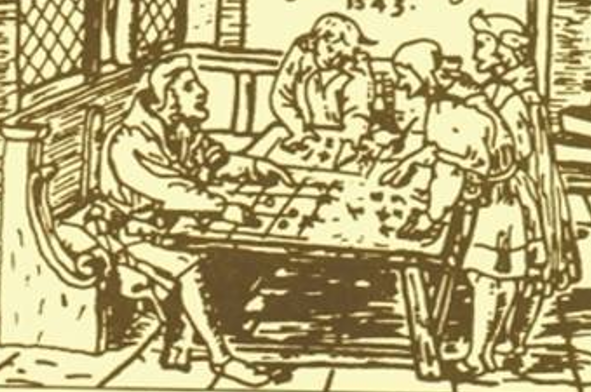
How did they calculate the valuations in the Valor Ecclesiasticus? The fundamental research question for this project is to understand the process of the Valor survey, how the clerks who…
-
A religious island

The ruins of Godstow Abbey sit on an island to the north of Oxford where the Thames splits into multiple channels. The place-names surrounding Godstow — Hinksey, Osney, Cripley, Medley,…
-
The King’s Book

I was recently lucky enough to visit The National Archives to have a close-up look at the Liber Regis – The King’s Book – the presentation copy of the Valor Ecclesiasticus…
-
Postcard from Cumbria

While visiting my family home over the May Bank Holiday – Bardsea, in Furness, Cumbria – I was able to visit the site of a former religious institution that will…
-
A Tudor Tileworks at Hollingbourne, Kent

Listed among the estate holdings of Christchurch Cathedral Priory at Canterbury, as recorded in the 1535 Valor Ecclesiasticus can be found a whole array of property that was typical for a great…
-
A Supreme Task

The Valor ecclesiasticus is best known – where it is known at all, that is, as it must have a claim for being the most obscure of all artefacts associated…